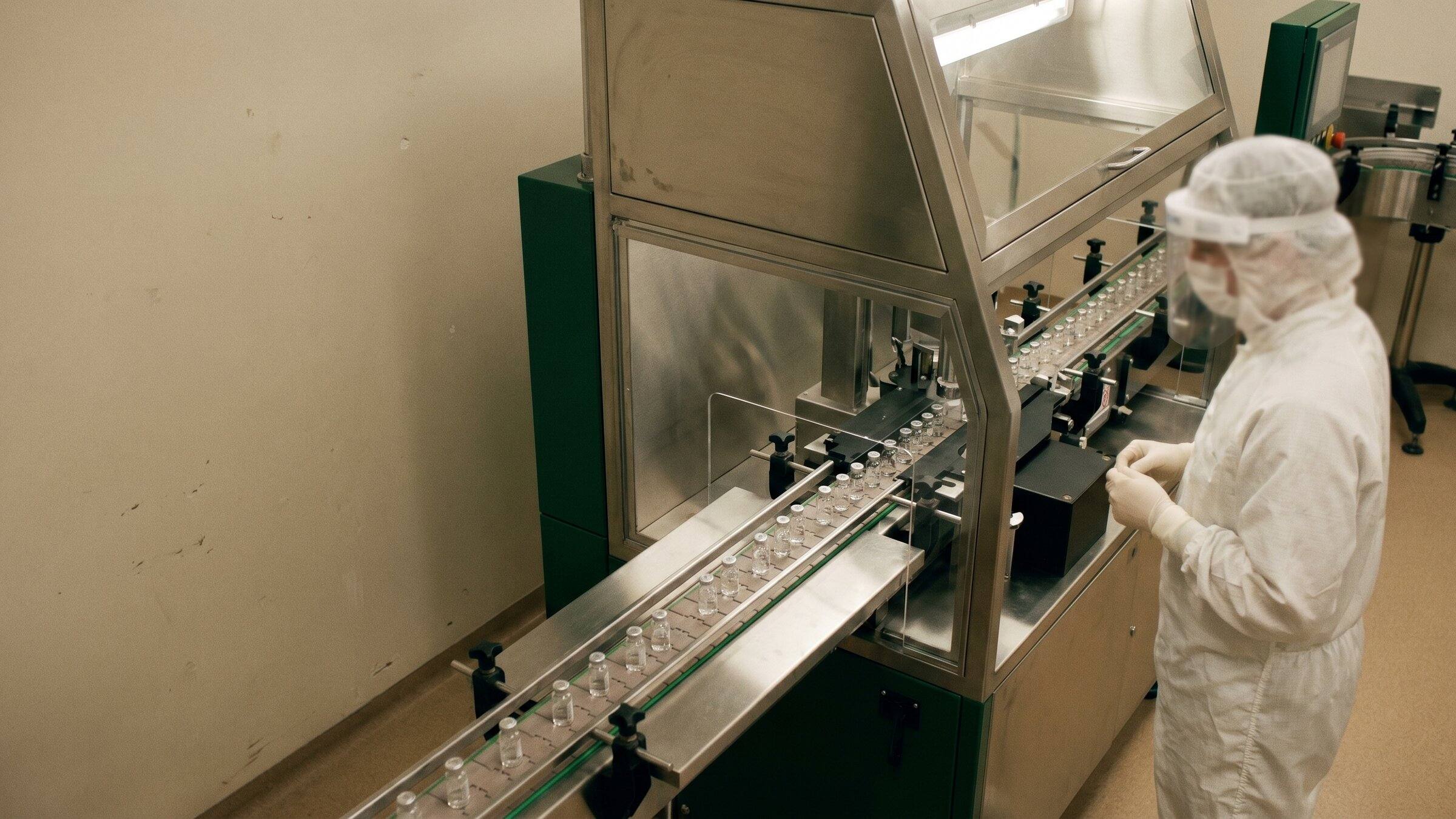
PHARMA · STERILE FILL 3 hrs → 45 min per report
Deviation reports drafted in minutes, not hours.
Context: QA operators at a sterile-fill facility author two to four hours per deviation report — narrative, batch context, CAPA cross-references. Regulator-sensitive, pattern-heavy, slow.
Built: An assistant grounded in the operator's own deviation history and SOP corpus. Structured event input — batch, equipment, observation, classification — returns a first-pass narrative in the regulator-accepted format. Operator edits; QA approves.
Outcome: First-draft time down from roughly three hours to forty-five minutes across a four-week pilot. No approval rejections attributable to draft quality. Annualised, around 1,200 operator hours reclaimed for investigation work instead of authoring.
Built in Module 4 — AI Assistants, on the foundation of Module 1.
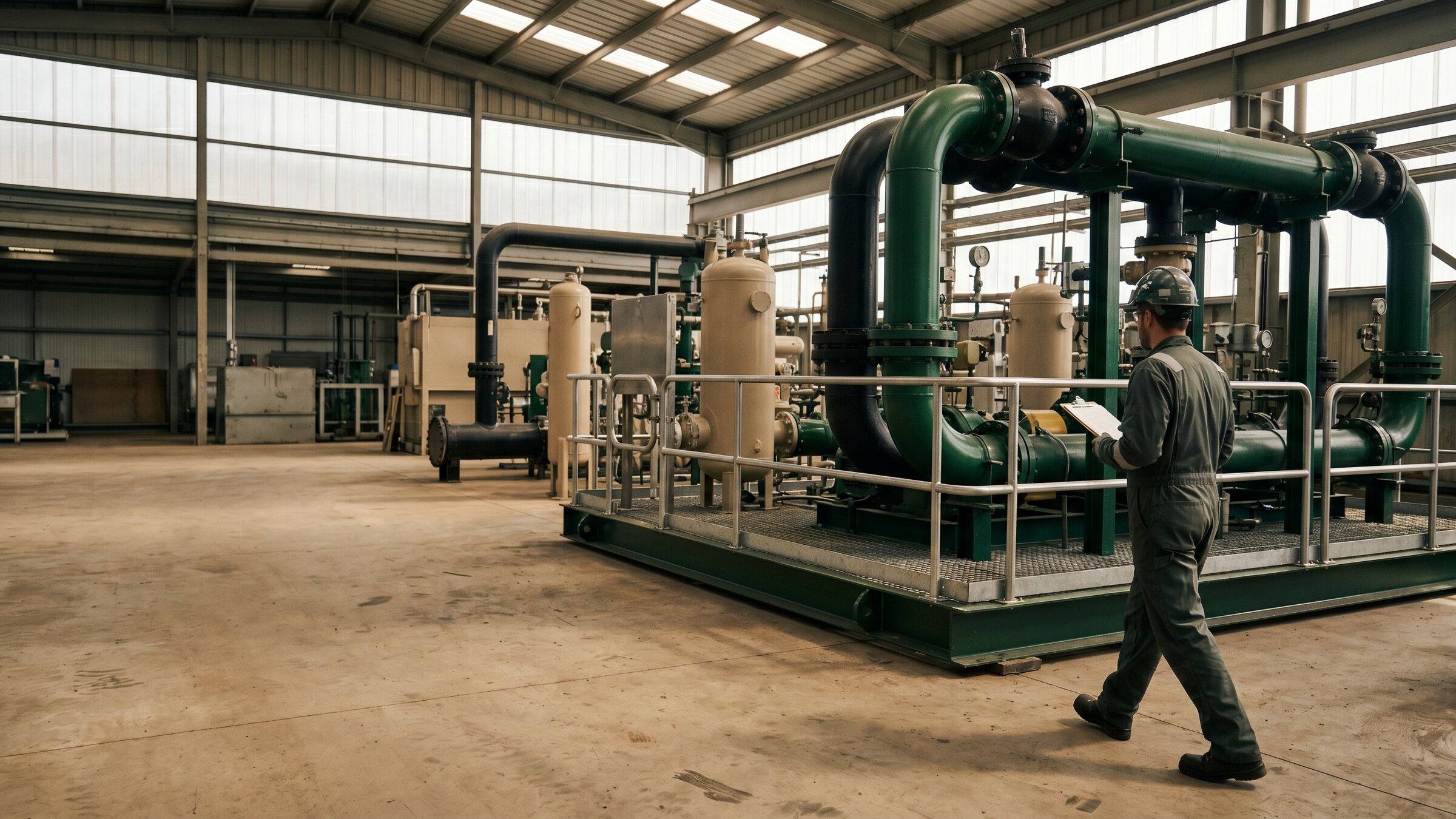
INDUSTRIAL MAINTENANCE 6 months → <48 hrs coding latency
Forty thousand work orders a year, coded in hours instead of months.
Context: Rotating-equipment technicians at a gas-processing plant write shorthand work-order narratives ("pump seal leak, replaced, restarted"). Reliability engineers need these coded to ISO 14224 failure modes to do anything useful with them. Manual coding runs six months behind, always.
Built: An automation that reads the free-text narrative and proposes ISO 14224 codes plus confidence. The reliability engineer approves or overrides in batches. Low-confidence entries route to the weekly review queue.
Outcome: Backlog cleared in three weeks. Coding latency down from six months to under 48 hours. Downstream reliability dashboards reflect current state for the first time in years.
Built across Module 3 — Basic Automations and Module 4 — AI Assistants.
COMMERCIAL INSURANCE · UNDERWRITING 3 days → 4 hrs to triage
Broker submissions triaged to quote-ready in under four hours.
Context: A mid-market commercial underwriting team receives around eighty submissions a week — ACORD forms, loss runs, broker emails, schedules in Excel. The analyst spends most of the morning just normalising the data before underwriting can begin.
Built: A multi-step workflow that ingests the submission email with attachments, extracts standardised risk data, runs preliminary eligibility rules, and drafts a reject / refer / quote recommendation. The human underwriter decides. Rejections go out in hours instead of days.
Outcome: Submission-to-triage time down from three days to four hours. Broker win-rate on the small-submission segment up meaningfully because speed matters in that segment. Underwriting authority unchanged.
Built across Module 5 — Agentic Automations and Module 3 — Basic Automations.
COMMERCIAL BANKING · CREDIT OPS
Credit memos that start at the analysis, not the boilerplate.
Context: Relationship managers spend day one of every credit memo pulling ratios, summarising public filings, and reformatting last year's memo — before reaching the actual credit judgement.
Built: An assistant that assembles a fact-pack skeleton — ratios, covenant history, industry context, prior-memo excerpts — tagged by source. The relationship manager inherits a populated template and spends their time on the decision, not the document.
Outcome: Day one of memo work now opens on the judgement, not the formatting. Source-tagged evidence means credit committee reviewers can trace every figure back to its origin in one click.
Built in Module 4 — AI Assistants.
LOGISTICS · CUSTOMS BROKERAGE
Customs paperwork parsed before the container lands.
Context: Freight forwarders ingest commercial invoices, packing lists, and certificates of origin in a dozen formats and languages. The structured fields needed for customs clearance — HS codes, origin, incoterms, values — sit buried in unstructured text.
Built: An extraction pipeline that reads the document set and pre-populates the brokerage system. The broker verifies. Clearance filings go the moment the cargo is manifested, not two days after the truck arrives.
Outcome: Paperwork becomes an arrival-day task instead of a post-arrival delay. Clearance latency moves off the critical path for the operations team.
Built in Module 3 — Basic Automations.
Your case next. Bring us the three tasks worth automating. We scope the modules and coach your team through the build.
Hear more by booking a free call →